

What is 304 food-grade stainless steel, and why it matters for cutlery
Walk into any kitchenware shop in India and you will find dozens of cutlery sets at wildly different price points — spoons, forks, knives, and serving spoons that look virtually identical on the shelf but may be made from entirely different grades of steel. Most buyers pick based on design and price, with very little awareness that the grade of stainless steel in their cutlery makes a meaningful difference to its safety, durability, and performance in an Indian kitchen. The number on the packaging — 304, 202, 430 — is not a random product code. It is a material specification that tells you exactly what you are buying and whether it belongs in contact with your family's food.
This guide explains what 304 food-grade stainless steel is, how it differs from lower-grade alternatives, why it is the recommended standard for cutlery in Indian households, and how to identify it when you are buying spoons, forks, knives, and serving spoons. Because the cutlery that goes into your food every single day deserves the same scrutiny you apply to the food itself.
What is stainless steel — and why are there different grades?
Stainless steel is an alloy — a mixture of iron with specific percentages of other metals, primarily chromium and nickel, that give the material its characteristic resistance to rust and corrosion. The "stainless" property comes from chromium, which forms an invisible protective oxide layer on the surface of the steel when exposed to oxygen. This layer is self-repairing — if it is scratched or damaged, it reforms automatically in the presence of air, which is why stainless steel cutlery stays rust-free even after years of daily washing.
Different grades of stainless steel are produced by varying the percentages of chromium, nickel, and other alloying elements like manganese and carbon. These variations produce materials with different levels of corrosion resistance, strength, formability, and food safety. For cutlery and food-contact applications, the two most relevant grades are 304 (also written as 18/10) and 202 — and the difference between them is significant enough to matter for every Indian household.
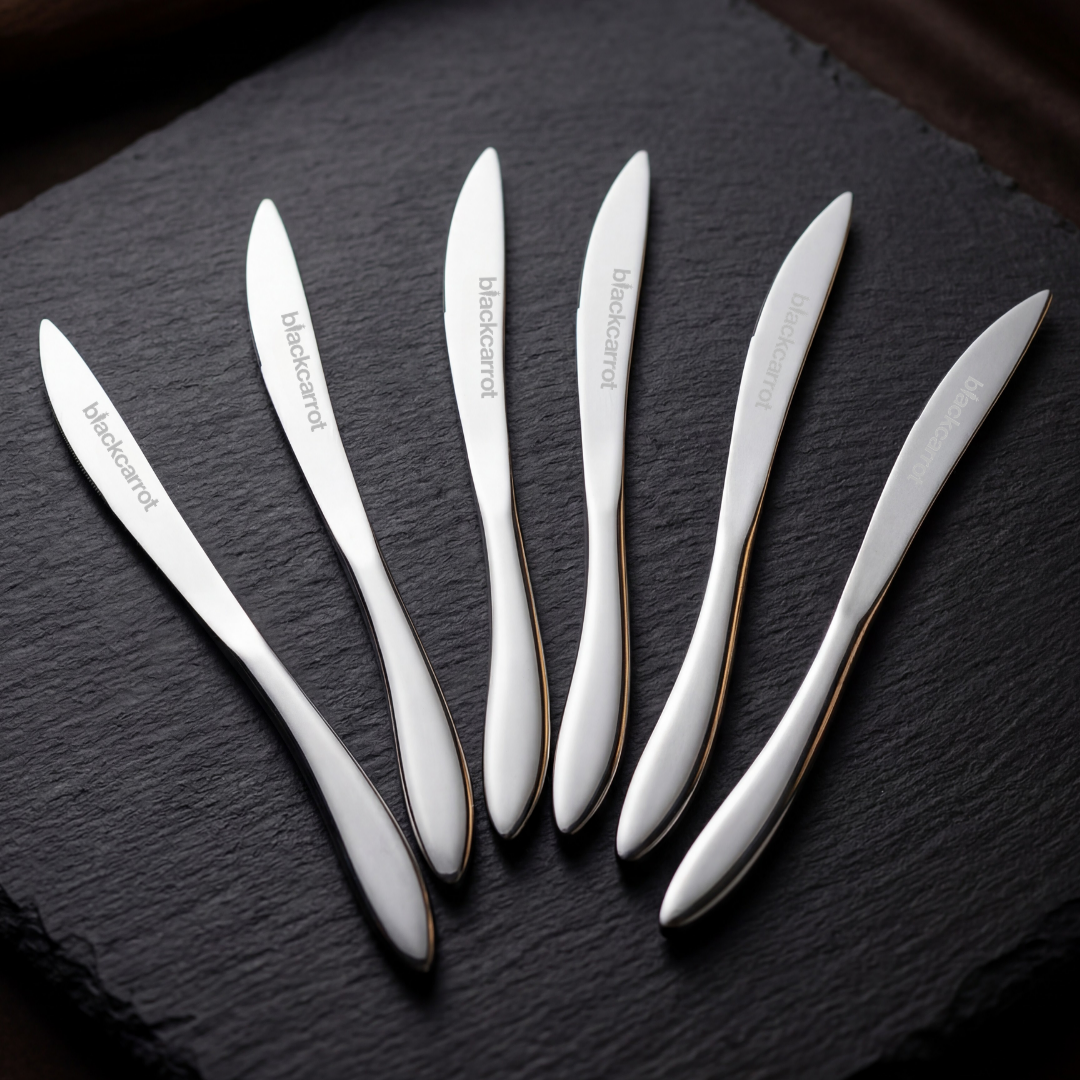
What is 304 stainless steel?
Grade 304 stainless steel — also known as 18/10 stainless steel in the cutlery industry — gets its designation from its composition: approximately 18 percent chromium and 10 percent nickel, with the remainder being iron and small amounts of other elements including carbon and manganese. It is the most widely used stainless steel grade in the world for food-contact applications, including cutlery, cookware, food processing equipment, and kitchen sinks. The combination of 18 percent chromium and 10 percent nickel produces a material with exceptional corrosion resistance, excellent formability, and complete food safety across a wide range of temperatures and chemical environments.
The high nickel content in 304 stainless steel is what distinguishes it most significantly from lower-grade alternatives. Nickel contributes to the steel's ability to resist corrosion from acidic and alkaline environments — exactly the conditions that cutlery faces daily in an Indian kitchen, where it comes into contact with tamarind-based curries, lemon-dressed salads, yoghurt, vinegar, and a wide range of other chemically active ingredients. Without sufficient nickel content, stainless steel corrodes more readily in these environments, developing pitting, rust spots, and surface degradation that compromises both the appearance and the safety of the cutlery over time.
How does 304 compare to lower-grade stainless steel?
304 vs 202 stainless steel
Grade 202 stainless steel is the most common lower-grade alternative found in budget cutlery sold in India. It contains approximately 17 to 19 percent chromium but significantly less nickel — typically 4 to 6 percent — with the nickel partially replaced by manganese as a cost-saving measure. The result is a material that looks similar to 304 grade steel when new but has noticeably lower corrosion resistance, particularly in acidic environments. Over months and years of daily contact with Indian food — with its high proportion of acidic, tamarind-based, and lemon-heavy dishes — 202 grade cutlery develops pitting and rust spots that 304 grade cutlery resists entirely.
The price difference between 202 and 304 grade cutlery is real but modest — significantly less than most consumers expect given the material performance difference. Choosing 304 grade cutlery over 202 is one of the highest-value material upgrades available in Indian kitchenware purchasing, delivering meaningfully better durability and safety for a relatively small additional investment.
304 vs 430 stainless steel
Grade 430 stainless steel is a ferritic grade that contains approximately 16 to 18 percent chromium but no nickel at all. While it has acceptable corrosion resistance in dry or mildly corrosive environments, it performs significantly worse than 304 in contact with acidic foods and is more susceptible to pitting corrosion over time. Grade 430 is commonly used for decorative trim and appliance panels but is not recommended for cutlery that will be in regular contact with food. Some budget cutlery sets in India use 430 grade steel — identifiable by the fact that it is strongly magnetic, unlike 304 grade steel which has very weak or no magnetic response.
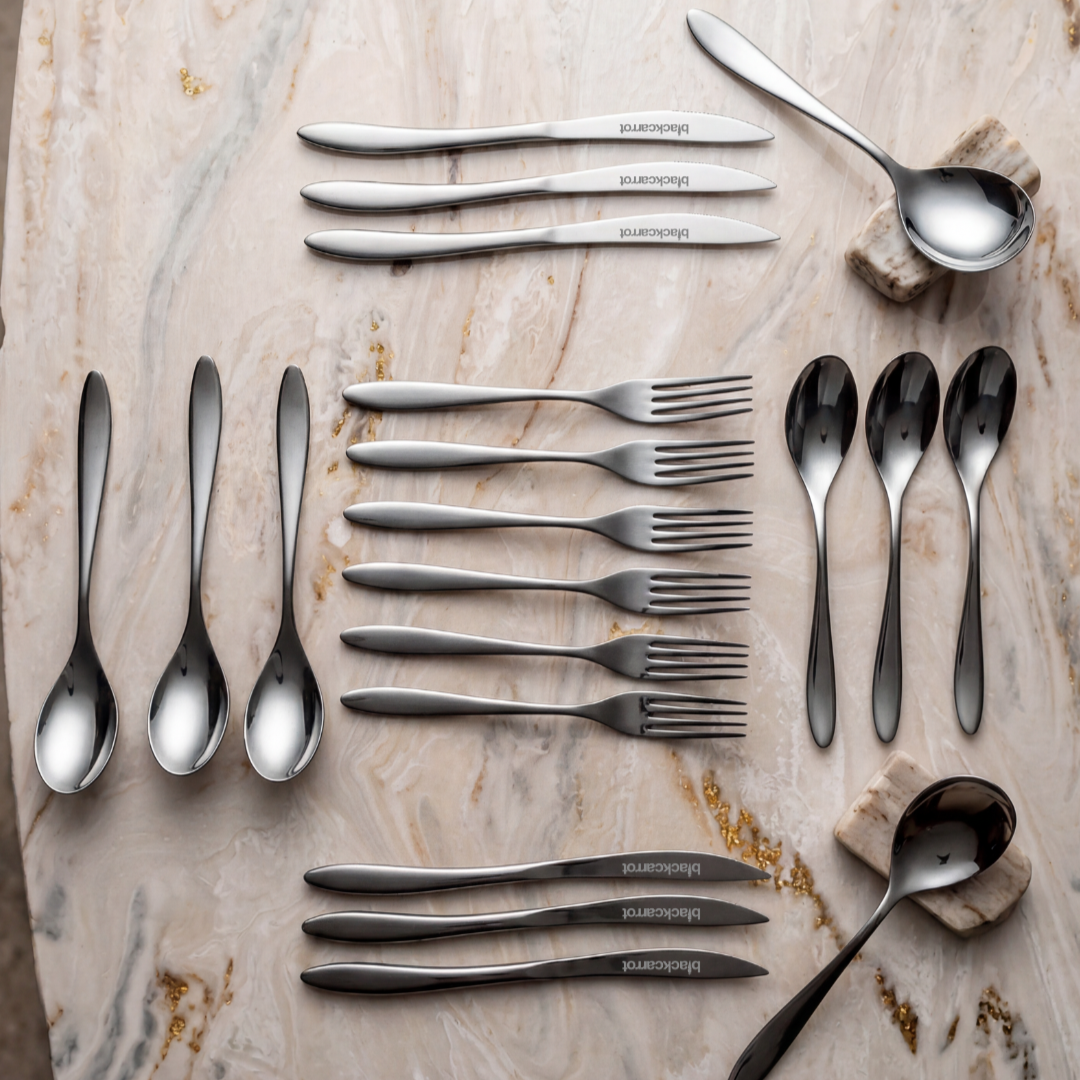
Why 304 stainless steel matters specifically for Indian cutlery
The case for 304 food-grade stainless steel cutlery is particularly strong in the Indian kitchen context because of the specific characteristics of Indian cooking and eating. Indian cuisine uses a higher proportion of acidic ingredients than most other major food cultures — tamarind, lemon, yoghurt, tomatoes, vinegar-based pickles, and fermented foods are daily staples rather than occasional additions. These ingredients accelerate corrosion in lower-grade steels, which is why cheap stainless steel cutlery in Indian households so often develops rust spots and pitting within a year or two of regular use.
Indian cooking also involves higher temperatures than many other cuisines — hot dal ladled directly onto a spoon, pressure-cooked gravies served immediately, tawa-hot rotis picked up with serving spoons. The thermal cycling that cutlery undergoes in daily Indian kitchen use — from hot food to dishwasher to room temperature and back — stresses the material in ways that lower-grade steels handle less well over time. Food-grade 304 stainless steel maintains its surface integrity and corrosion resistance across this full range of conditions, which is why it is the only grade that genuinely delivers on the promise of lifelong, rust-free cutlery in Indian households.
How to identify 304 grade cutlery when buying in India
Identifying 304 grade stainless steel cutlery at the point of purchase requires a combination of label reading, physical testing, and brand knowledge. The most reliable method is to look for explicit grade markings on the packaging — "304 stainless steel", "18/10 stainless steel", or "food-grade stainless steel" are all indicators of 304 grade material. Reputable brands that manufacture to 304 standard will typically state this clearly because it is a genuine product advantage worth communicating.
If grade markings are absent, the magnet test provides a rough indication — hold a magnet against the cutlery. Very weak or no magnetic response suggests 304 or similar austenitic grade. Strong magnetic attraction suggests 430 or a lower-nickel grade. Weight is another useful indicator — 304 grade cutlery tends to have a satisfying substantial weight that lower-grade alternatives often lack. And price is a signal, though not a definitive one — genuinely 304 grade cutlery sets at suspiciously low prices should be treated with caution, as the material cost alone makes very cheap 304 grade products unlikely.
BlackCarrot cutlery: built to 304 food-grade standard
BlackCarrot's cutlery range — spoons, forks, knives, and serving spoons — is manufactured from 304 food-grade stainless steel, the same standard used in commercial kitchen and food-service equipment worldwide. Every piece in the range is designed for the specific demands of the Indian kitchen — the daily contact with acidic curries and gravies, the thermal cycling from hot food to washing and back, and the frequency of use that makes durability as important as design in an Indian household cutlery set.
The difference between BlackCarrot's 304 grade cutlery and cheaper lower-grade alternatives is not immediately visible in the shop — both look like stainless steel. The difference becomes apparent over months and years of daily use, when 304 grade pieces maintain their finish, weight, and surface integrity while lower-grade pieces develop the pitting, rust spots, and surface degradation that make replacement necessary far sooner than it should be.
Frequently asked questions
What does 304 mean in stainless steel?
304 is the grade designation for a stainless steel alloy containing approximately 18 percent chromium and 10 percent nickel — also written as 18/10. It is the most widely used food-grade stainless steel in the world, known for its exceptional corrosion resistance and complete safety for food contact applications.
Is 18/10 the same as 304 stainless steel?
Yes. 18/10 is the cutlery industry's shorthand for 304 grade stainless steel — the numbers refer to the approximate percentages of chromium (18%) and nickel (10%) in the alloy. Both terms refer to the same material standard.
Can I use the magnet test to check stainless steel grade?
The magnet test provides a rough indication. Grade 304 stainless steel has very low or no magnetic response due to its austenitic structure. Grade 430 is strongly magnetic. Grade 202 falls between the two. It is not a definitive test but is a useful first filter when grade markings are not available on the packaging.
Does the grade of stainless steel affect food safety?
Yes. Lower-grade stainless steels with less chromium and nickel are more susceptible to corrosion in acidic environments, which can result in metal ions leaching into food over time as the surface degrades. Food-grade 304 stainless steel maintains a stable, non-reactive surface across all food-contact conditions, making it the safe choice for daily cutlery use.
How do I know if BlackCarrot cutlery is 304 grade?
BlackCarrot explicitly states the 304 food-grade stainless steel specification for its cutlery range in the product descriptions. This is a core part of what distinguishes BlackCarrot's cutlery from cheaper alternatives — the material standard is not assumed, it is certified and communicated clearly.
The takeaway
304 food-grade stainless steel is not a marketing term — it is a material specification that tells you exactly what your cutlery is made from and how it will perform over years of daily use. In an Indian kitchen where acidic ingredients, high temperatures, and frequent washing are the daily norm, the difference between 304 grade and lower alternatives is the difference between cutlery that lasts a lifetime and cutlery that needs replacing within a few years. BlackCarrot's spoons, forks, knives, and serving spoons are built to 304 standard because your family deserves cutlery that is as safe and durable as the food it serves.




1 comment
This article provides excellent clarity on why 304 steel is so crucial for daily kitchen safety, especially with the high acidity in Indian cooking. Given that the protective oxide layer automatically reforms when exposed to oxygen, how does prolonged exposure to heavy scratch-inducing cleaning pads affect its long-term resistance compared to lower-grade steels? Also, on a related note about household safety and international quality certifications, does the 304 standards compliance process follow a similar independent auditing framework to what is described in safety guides like https://guiadebetsafeperu.com/bonus, or are metal grade certifications handled through a completely different verification protocol?